

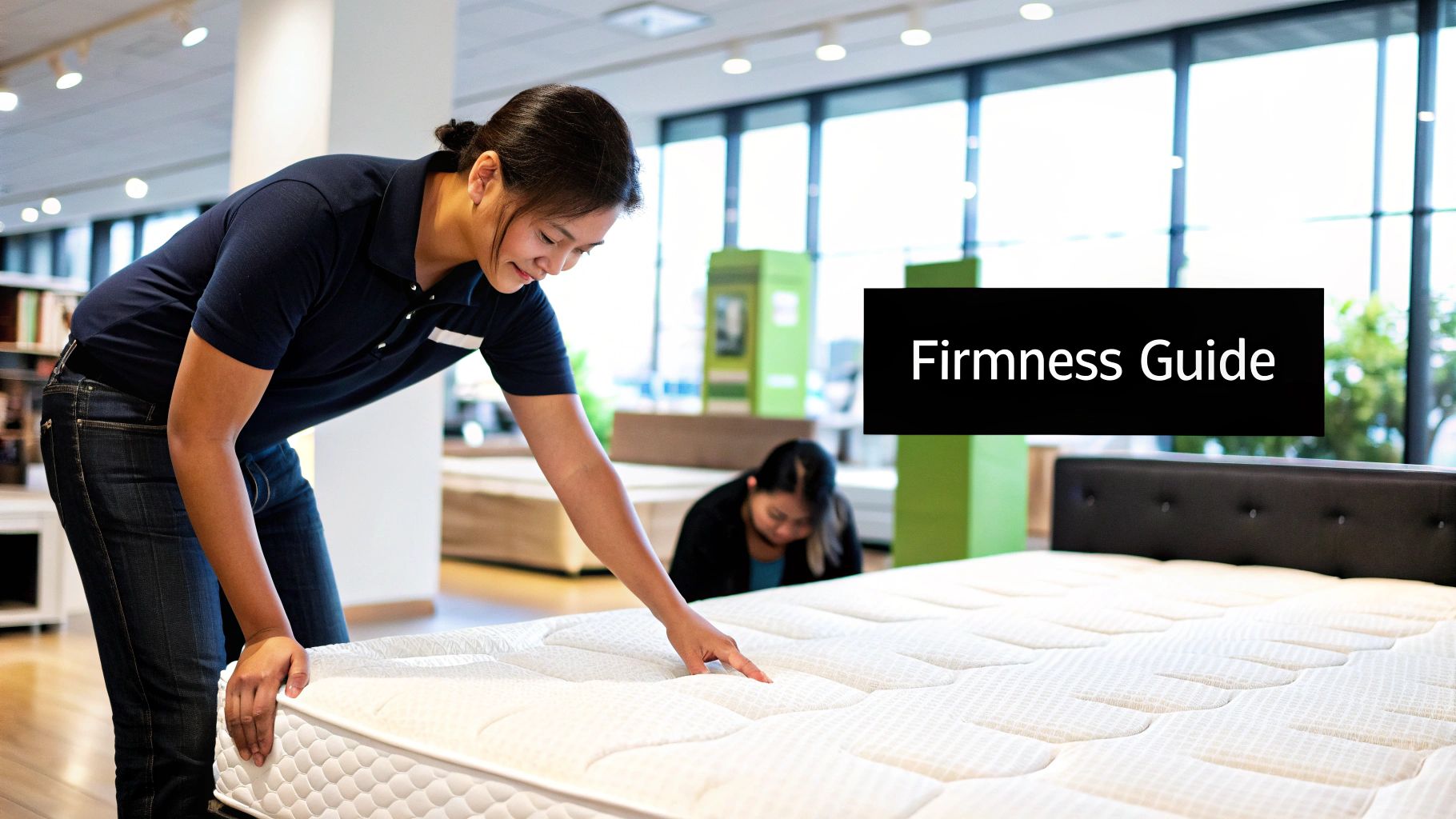
Have you ever wondered why you find a mattress so comfortable while your partner experience back pains after lying on same mattress?
Unlike driving a car where one model works for everyone, One mattress would feel differently to different people.
If you are planning to buy a new mattress, selecting the right mattress firmness is by far the most important thing to look out for to experience restorative sleep night after night.
Mattress firmness is subjective and a personal preference influenced by your sleep position, weight, and body type. it’s about initial feel and comfort, not support. A mattress can be soft and supportive, or firm and unsupportive.
But before you can consider how these factors play into your decision, it’s important to learn about the mattress firmness scale so you can more easily determine if a softer or firmer mattress is right for you.
What is Mattress Firmness?
Mattress firmness is simply how soft or firm a mattress feels when you first lie on it.
Are you sinking into the mattress or resting right on top of it? Are you experiencing a lot of push back, or do you notice that the materials are contouring to the curves of your body? These are just a few of the questions you can ask to determine whether or not a mattress is soft, medium, or firm.
The firmness level of a mattress is arguably the most critical factor in choosing one, as it directly dictates how well the mattress will support your body, relieve pressure, and align your spine. Getting it wrong can lead to poor sleep and chronic pain.
Here’s a detailed breakdown of how and why firmness plays such an important role.

Why Firmness Level is Important
1. Spinal Alignment (The #1 Priority):
-
- Why: When you lie down, your spine should maintain its natural "S" curve, similar to when you stand with good posture. An improper firmness disrupts this.
-
How it works:
- Too Soft: Your heavier parts (hips, shoulders) sink in too deeply, causing the spine to sag or curve unnaturally in a hammocking position.
- Too Firm: Your lighter parts (lower back, waist) don't sink in enough, leaving the spine unnaturally bowed upwards.
- Just Right: The mattress contours to your body's curves, supporting the lumbar (lower back) and keeping the spine in a neutral, straight line. This reduces stress on muscles and ligaments.
2. Pressure Relief:
- Why: Prolonged pressure on hips, shoulders and knees can cut off circulation, causing discomfort, numbness, and the urge to toss and turn.
- How it works: The comfort layers of a mattress (memory foam, latex, pillow top) compress under these points to distribute weight evenly. The right firmness provides a "cradling" effect without allowing you to bottom out, preventing pressure points.
3. Sleep Quality and Disruption:
- Why: Discomfort from poor alignment or pressure points leads to micro-awakenings throughout the night, fragmenting sleep cycles and preventing deep, restorative sleep.
- How it works: A correctly firm mattress minimises discomfort, allowing you to move through sleep stages with fewer interruptions. You wake up feeling more refreshed.
4. Partner Disturbance and Motion Isolation:
- Why: If you share a bed, your partner's movement can disturb your sleep.
- How it works: While motion isolation is more about material (e.g., memory foam is excellent), firmness interacts with it. A mattress that's too soft for a combination may cause a "roll-together" effect. The right firmness for each individual helps each person stay in their own supportive zone.

Mattress Firmness Scale Explained
The mattress firmness scale is a numerical rating system (typically 1-10) used by the industry and reviewers to give a general sense of how soft or firm a mattress feels when you first lie down on it. It's the most basic and important starting point when shopping for a mattress.
On this 10-point firmness scale, 1 is the softest and 10 is the firmest. Keep in mind that this scale can be different for each brand. What one brand calls a 6 might feel like a 7 from another.
|
Firmness Level |
Feel |
Description |
|
1-2 |
Ultra Plush |
Closely conforms to the body |
|
3 |
Plush |
Plenty of give with less sinkage |
|
4 |
Medium-plush |
More conforming with some pushback |
|
5 |
Medium |
Balance of a contoured feel with some rigidity |
|
6 |
Medium-firm |
A slightly more rigid surface with some give, suitable for most sleepers |
|
7-8 |
Firm |
Minimal sinkage without conforming to the body |
|
9-10 |
Extra firm |
Rigid surface that does not conform or sink |
Here’s a breakdown of the common levels:
1. Ultra plush (1-2 out of 10)
- Feel: You sink in deeply, with a "cloud-like" or "hammock" sensation. Ultra soft mattresses may provide ample pressure relief for lighter sleepers but can increase pressure and pain for heavier individuals.
- Who it's for: A very small niche. While a soft sleeping surface can sound like heaven, sleeping on these beds may put added pressure on your joints, resulting in body pain and poor sleep quality. That’s why it’s rarely recommended as it offers minimal support and can cause alignment issues. Not common in the mainstream market.
- Sleep position: Side sleepers may find softer mattresses the most comfortable because they cradle their shoulders and hips to reduce pressure.
- Body weight: These mattresses are typically suitable for lighter sleepers under 60kg who won’t sink too deeply.
- Typical Construction: Very thick plush pillow tops, often with memory foam or soft latex.
2. Plush (3 out of 10)
- Feel: Plush mattresses cradle your body for a contoured cozy feel with gentle support.
- Pressure relief: As you sink into a plush mattress, you may get more pressure relief for your shoulders and hips, though this can increase pressure for individuals over 100kg.
- Who It’s for: People who primarily sleep on their sides may prefer softer mattresses to cradle their shoulders and hips.
- Body weight: Lighter sleepers under 60kg can gently sink into a soft mattress for pressure relief without compromising the alignment of their spines.
Enjoy the softness that feels like you are floating on a fluffy cloud with The Elmira Snow Plush Mattress - our softest mattress known for it’s luxurious & cooling cushioning. It’s designed with Elmira Ultra cooling Comfort Foam for cozy sleep combined with pressure relief foam that cradles your hips and shoulders as it deeply conforms to your body for maximum comfort. Your dreams are waiting on this plush feeling haven.

3. Medium Plush (4 out of 10)
Medium-plush mattresses fall in the middle of the firmness spectrum, leaning softer for a more contoured feel. For sleepers who like to sink into their beds but need more pushback, a medium-plush mattress may be worth considering.
- Support: Medium-plush mattresses provide more of a sinking, cradled feeling than firmer options.
- Pressure relief: More soft than firm, medium-soft mattresses provide significant pressure relief, especially for lighter and average weight sleepers.
- Sleep position: Side sleepers and back sleepers are more likely to find medium-soft beds comfortable thanks to the pressure relief and moderate support.
- Body weight: Sleepers who are on the lighter side of average (between 60kg and 100kg) may find medium-plush mattresses more comfortable than heavier sleepers who may sink too deeply into the soft surface.
The Elmira Hybrid Plush Mattress is a medium-plush option that offers exceptional comfort and pressure relief with our proprietary Elmira ultra cooling comfort foam combined with an innovative double-layered air memory cloud-like foam for a contoured feel all working together with smart steel edge-edge pocket coils to keep you comfortable and supported.

SHOP ELMIRA HYBRID PLUSH MATTRESS
4. Medium (5 out of 10)
Mattresses with a medium firmness level find a balance between the contoured feel of a plush mattress and the stable feel of a firm one. Many people who like a softer feel but need some support choose this level of firmness
- Support: In the middle of extremes, medium firmness beds may not offer a rigid enough surface for heavier individuals and stomach sleepers.
- Pressure relief: Most sleepers will find that medium firmness levels offer plenty of pressure relief balanced with support for spinal alignment.
- Sleep position: Medium firmness beds provide support and comfort for combination sleepers, back sleepers, and some side sleepers.
- Body weight: Sleepers with an average or under-average weight (up to 100kg) may find this firmness comfortable, but heavier individuals may not have enough support.
The Elmira Snow Medium Mattress features our innovative high density medium support foam in a medium feel for a cradled, supportive feel that relieves pressure and keeps you cool.

SHOP ELMIRA SNOW MEDIUM MATTRESS
5. Medium/Luxury Firm (6 out of 10)
In Nigeria, medium-firm mattresses are usually referred to as semi-orthopaedic mattress.
They’re the most popular mattress firmness rating offering a balanced blend of cushioning and support. Though with more stability than medium mattresses but still providing a cushioned feel such that you sink in slightly for pressure relief but feel lifted on top of the mattress.
- Support: Medium-firm mattresses are taut with plenty of give for optimal comfort.
- Pressure relief: Though not as conforming as softer mattresses, medium-firm beds cradle your body and offer pressure relief for sensitive joints.
- Sleep position: The combination of support and pressure relief make medium-firm mattresses suitable for most sleep positions, primarily back and combination sleepers. Plus it’s a great compromise for couples with different preferences.
- Body weight: Sleepers of any size may find medium-firm mattresses comfortable, though these beds may be too firm for lightweight individuals under 60kg.
With a medium firmness feel, the Elmira Hybrid Medium Mattress combines natural talalay latex wrapped in breathable fiber with our award winning Elmira ultra cooling comfort foam for melt-in pressure relief and spinal alignment.

SHOP THE ELMIRA HYBRID MEDIUM MATTRESS
6) Firm (7-8 out of 10)
In Nigeria, firm mattresses are usually referred to as orthopaedic mattress.
When you choose a firm mattress rated 7-8 out of 10, you are getting strong support for your spine. This type of mattress is great for back sleepers and people with back problems. The firmness helps reduce back pain and keeps your body aligned. A firm surface means it won't sink much making it good for heavier sleepers who need extra support. However, It's important to find the right mix of firmness and comfort for a good night's sleep and your overall health.
- Support: Firm beds offer more pushback than most mattresses, keeping sleepers on top rather than letting them sink.
- Pressure relief: With some give, firm mattresses provide more pressure relief than extra firm beds but may not be comfortable for most sleepers.
- Sleep position: The best sleeping positions for a firm mattress are on your back or stomach. Firm mattresses are ideal for these positions because they prevent the hips and midsection from sinking too deeply, keeping the spine aligned. Side sleepers may find a firm mattress too harsh on hips and shoulders.
- Body weight: Heavier sleepers over 100kg may prefer firm mattresses because they often benefit from a more rigid surface that can evenly distribute their weight.
At Elmira, we have two types of firm mattress tailored to specific sleep preferences.
The Elmira snow firm mattress rated at 7/10 firmness provides a solid, stable surface for back and stomach sleepers. This mattress is engineered with the highest support foam 9.5-inch thickness in our entire mattress collection providing solid firm support for a stable and structured sleep experience.

SHOP ELMIRA SNOW FIRM MATTRESS
The Elmira Hybrid firm mattress rated at 8/10 is a firm feel that combines the instantly adaptive high density lumbar support foam with 7-inch smart steel Edge-to-Edge pocketed Coils for the support and pressure relief you need for luxury sleep. It’s best recommended by chiropractors for back pain relief, edge support and for people who weigh more than 100kg

7) Extra Firm (9-10 out of 10)
Like extra plush mattresses, very few people prefer an extra firm mattress, so you won't find many on the market. Extra firm beds feels like sleeping on stone which means they provide a much more rigid surface at the cost of that pillowy feeling. While some people have recommended firm mattresses are better for your back, it depends on your personal needs and preferences. That said, this level of firmness can be an excellent option for extremely over-weight people who want more support.
- Support: Extra firm mattresses are the most rigid and lack the contoured feel, so a majority of sleepers won’t sink in as they sleep.
- Pressure relief: In exchange for the highest level of back support, extra firm mattresses do not contour to your body.
- Sleep position: Stomach sleepers and some back sleepers may prefer a very firm mattress because it prevents their hips from sinking and keeps their spines better aligned.
- Body weight: Heavier sleepers over 100kg are more likely to appreciate an extra firm mattress that offers even weight distribution to keep them comfortable.

What Determines Mattress Firmness?
Knowing what affects mattress firmness can help you narrow down the best mattress type and firmness for your needs. The primary factors that impact mattress firmness include:
- Mattress type: Some materials tend to be softer or firmer than others. For example, compared to the firm and bouncy feel of latex, memory foam is one of the softest materials, so memory foam mattresses often feel softer.
- Construction: How your mattress is constructed can impact its firmness. A mattress with thicker layers of foam on the top may feel softer than one with a thin comfort layer or thicker sections of latex or coils.
- Sleeper weight: Your body weight often affects how firm a mattress feels. This metric is subjective but should be considered when choosing a mattress.
How to Choose Your Firmness: The Key Factors
Firmness is not one-size-fits-all. It's a personal equation based on:
1. Sleeping Position (Most Important Factor):
-
- Side Sleepers: Need a plush to Medium mattress. This is because softer surfaces allows the shoulders and hips to sink in enough to keep the spine straight and relieving pressure points. A mattress that's too firm will cause pressure in these areas. Recommended firmness 3-6 (plush to medium).
- Back Sleepers: Need a Medium to Firm mattress. A medium-firm surface supports the natural curve of the lower back providing even support along the spine without letting the hips sink too far. Recommended firmness 5-7.
- Stomach Sleepers: Need a Firm mattress. This prevents the hips from sinking and arching the lower back, which is the most common cause of back pain for stomach sleepers. Recommended firmness 7- 8
- Combination Sleepers: Usually best with a Medium-Firm mattress, which offers the best balance of contouring and support for various positions. Recommended firmness 5-6.
2. Body Weight and Build (A Critical factor):
- Lighter Individuals (<less than 60 kg): Often perceive mattresses as firmer because they don't compress the materials as much. They may prefer a Softer feel within their position's range to get adequate contouring.
- Average Weight (60kg–104 kg): Have the widest range of options. Can follow the sleeping position guidelines above effectively.
- Heavier Individuals (> greater than 104 kg): Need a Firmer or "Firm with extra support" mattress to prevent excessive sinkage, which can lead to misalignment and feeling "stuck" in the bed. They often require denser materials for durability.
3. Pain and Health Considerations:
- Back Pain: Generally, Medium-Firm is most often recommended by studies for non-specific lower back pain, as it best promotes neutral alignment.
- Shoulder/Hip Pain: Often indicates a mattress is too firm for a side sleeper, requiring a softer surface to relieve pressure.
- Arthritis & Joint Pain: A mattress with pressure-relieving comfort layers (softer top, supportive core) is crucial to cushion sensitive joints.
4. Personal Preference and Perception:
- Firmness is subjective. One person's "medium" is another's "firm." It's influenced by what you're used to and your own perception of comfort. Always test a mattress for at least 10-15 minutes in your typical sleep position.
Firmness vs. Support: What’s the Difference?
Firmness and support are different terms, though people often mix them up. The firmness of a mattress describes how it feels when you first lie down. It can be soft or firm. Support, however, is about how well the mattress keeps your spine aligned.
You can find a firm mattress that doesn’t offer support. Likewise, a softer mattress can provide great support. A supportive surface helps keep your spine in a neutral position, which can stop discomfort and back pain. The level of support from a mattress depends on its internal design, which includes the types and arrangement of coils or foam layers.
Elmira mattresses feature our innovative Elmira ultra cooling comfort foam technology, providing the comfort you're looking for without sacrificing any support. Our beds instantly adapt to your body while cradling your pressure points regardless of model firmness.

Elmira Mattresses: The Sleep Solution Built for the way you sleep.
We threw out the one-size-fits-all model & dedicated ourselves to engineering technology that uniquely adapts to you. From side, stomach to back sleepers and every body type or weight in between, There's an elmira mattress built for the way you sleep.
So once you determine what firmness level is best for you, take our mattress quiz to find the perfect Elmira mattress.

Find Your Perfect Fit
Take our mattress quiz for personalized recommendations based on your sleeping habits and preferences.
Elmira has a variety of high-quality, comfortable mattresses to meet your specific needs. With our innovative Elmira ultra cooling comfort foam and open breathable cell technology, you get the comfort and support exactly where you need it. Whether you’re searching for the best bed in a box for couples or you need a better mattress for yourself, Elmira has great options for everyone.
Key Takeaway
In summary, firmness level is the keystone of mattress choice. The goal is spinal alignment and pressure relief; a mattress that's too soft causes sinking, while one too firm creates pressure points, leading to pain and stiffness. Investing time in getting this right is an investment in your long-term health and well-being.
