

Mattress Thickness Guide: What Thickness Is Right for You?
Mattress Thickness Guide: What Thickness Is Right for You?

Once you’ve identified signs that you need a new mattress, there are a lot of factors you need to consider when looking for the perfect mattress upgrade.
One of the main considerations is how thick should your new mattress be.
By thickness, we mean the mattress height.
With over one-third of our lives spent in bed, the quality of your mattress, including it’s thickness - too thin or too thick can affect your quality of sleep and ultimately impact your overall health and wellness.
That’s why we’re here to help.
In this mattress thickness guide, we’ll break down the various levels of mattress thickness to help you determine the best choice for you based on your unique sleep needs, including your sleeping position and body weight.
What Is Mattress Thickness?
What Is Mattress Thickness?
Mattress thickness is the depth of a mattress without a bed frame or foundation. It is measured vertically from the bottom of the mattress to the crown. If you think of your fitted bed sheet or mattress protectors, that’s what encloses your mattress’s depth.
Mattress Thickness Chart
Mattress Thickness Chart

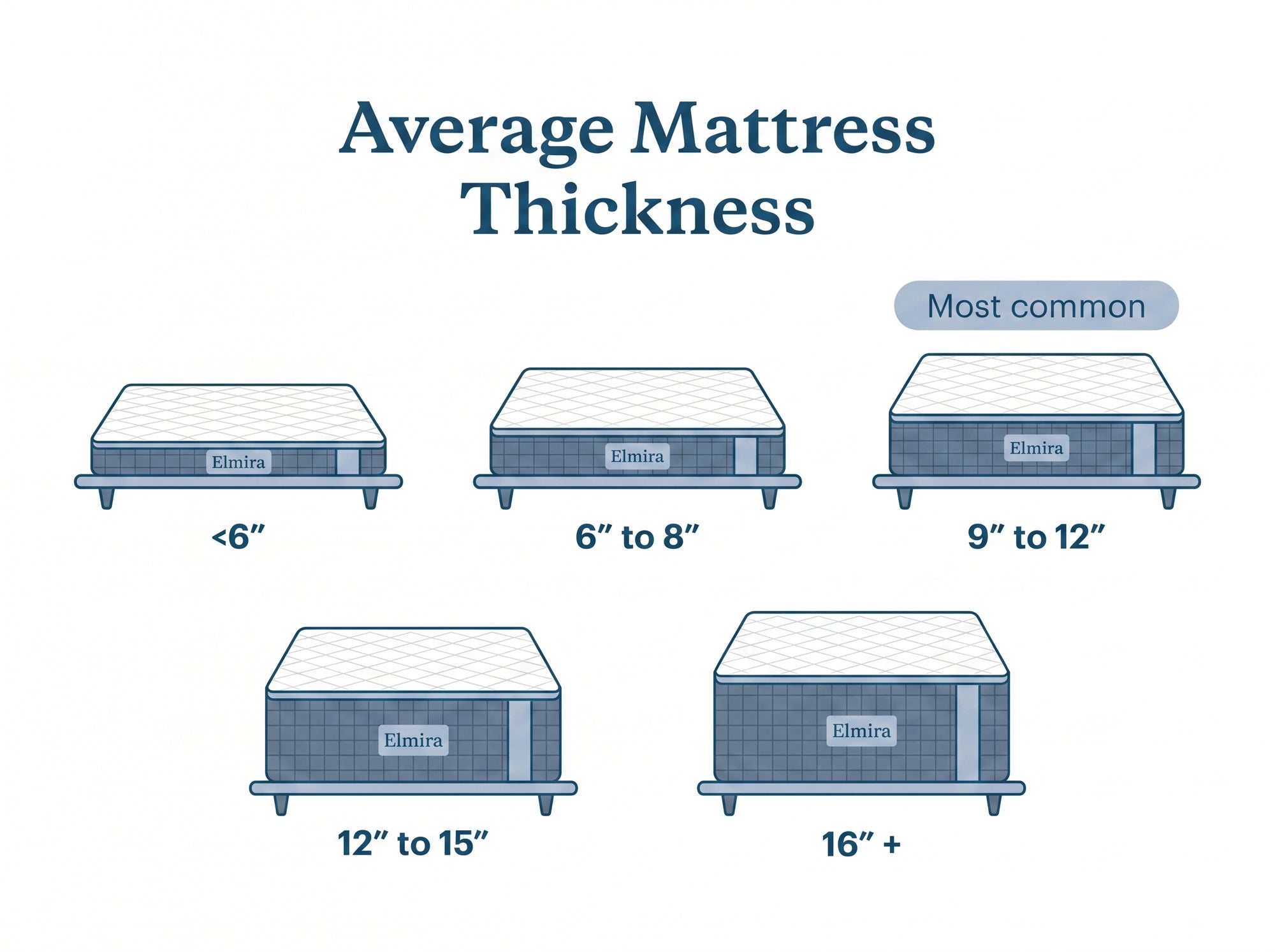
When it comes to thickness, mattresses can be separated into five distinct categories:
- Low profile (2 - 5 inches) — These mattresses range between 2 and 5 inches in height. They’re usually seen in fold-away beds, cribs and air mattresses. Made with Minimal layers in often a firm feel.
- Slim profile (5 - 8 inches) — Between 2 and 8 inches, slim-profile mattresses are typically budget-friendly made of dense foam, providing basic support without adding excess mattress height. These mattresses are ideal for children, hospital beds and sleepers with limited mobility.
- Standard profile (9-12 inches) — These are the most common mattress thickness. They range in height between 8 and 12 inches. May include several layers for support and comfort. Usually have soft to firm feel range.
In fact, the Elmira snow mattress collection falls into this standard category. It boasts 11 inches of the proprietary Elmira cooling comfort & relief foam designed to ergonomically align your spine. It also allows air to circulate and keep you cool throughout the night when you’re tucked in between your bed sheets.
- Deep or thick profile (12-15 inches) — These mattresses are between 12 and 16 inches which means they command a higher price point and also more durable - making it an ideal choice for sleepers looking for optimal comfort, support and pressure relief. Can be used in master or guest bedrooms.
The Elmira Hybrid Medium-firm Mattresses are a perfect example of a thick-profile mattress. It’s 12 inches of support consists of three layers of Elmira™ comfort cooling foam, natural latex and smart wave pocket springs for additional lift and bounce. Thick mattresses like these often balance cushioning and durability thanks to the more quality materials used in making them.
For a more luxurious feel with premium support and comfort, Elmira offers the 14-inches Elmira Hybrid Plush Mattress for side sleepers who need that extra plush feel. An extra-thick mattress like this also may appeal to side sleepers over 100kg.
- Extra thick profile (16+ inches) — With thicknesses of 16+ inches or more, an extra thick mattress can provide the most amount of comfort and support layers. They’re resistant to sagging, not ideal for those with limited mobility like children or elderly. Extra thick mattresses are the most expensive thickness option, and they’re also extremely heavy, making them difficult to ship and move.
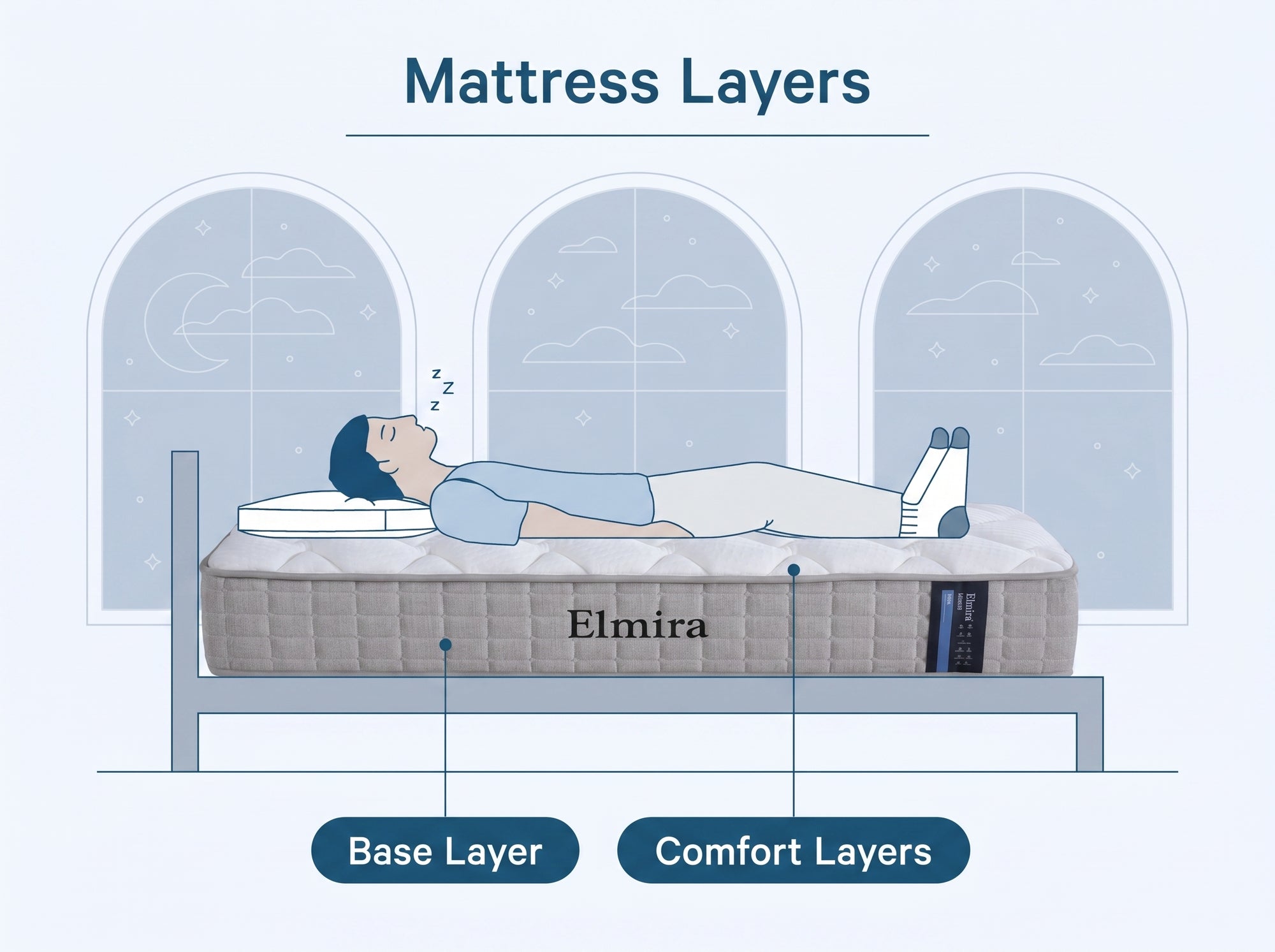
What Determines Mattress Thickness.
What Determines Mattress Thickness.
The quality and type of materials inside a mattress determine it’s eventual thickness which naturally influences the durability, firmness and support of the mattress.
Mattresses are built with multiple layers that are stacked on top of each other. A mattress’s thickness is determined by how many layers it is made of and how thick those layers are.
Most mattresses are constructed to have at least two layers, the comfort layer and the support layer, while more luxurious mattresses may have three or more layers.
UNDERSTANDING MATTRESS STRUCTURE
UNDERSTANDING MATTRESS STRUCTURE
Understanding how modern mattress structure is engineered and layered is key to choosing the right one for your sleep needs.
Here’s a detailed breakdown from the bottom up:
1. The Foundation (The Base Support Layer)
1. The Foundation (The Base Support Layer)
This is the core layer that provides the fundamental, non-negotiable support for the entire mattress and the sleeper. Without a thick enough mattress foundation, a bed will show signs of wear and tear sooner, such as sagging in the areas where your hips and low back lie.
For optimal performance, your mattress foundation layer should be around 5 to 6 inches thick. In high-quality memory foam mattresses, this layer can make up at least 50% of the overall mattress thickness.
- Purpose: To give the mattress its structural integrity, prevent sagging, and dictate its overall feel (firm, medium, plush).
Common Materials:
- Innerspring/Coils: The traditional base.
- Bonnell Coils: Hourglass-shaped, interconnected. Basic, bouncy feel.
- Offset Coils: Similar to Bonnell but hinged for better contouring.
- Pocketed/Micro Coils: Each coil is individually wrapped in fabric and moves independently. Excellent motion isolation, better contouring.
- Continuous Wire: One long wire formed into coils. Very firm and sturdy.
- High-Density Polyurethane Foam: A solid, supportive block of foam. Used in all-foam and hybrid mattresses. Density (measured in lbs/cubic ft) is critical—higher density (>1.8 lbs) means better durability and support.
- Latex (Dunlop or Talalay): Provides a very responsive, buoyant, and supportive base. Naturally cooling and durable.
The Elmira mattress collection features a combination of materials depending on the model.
Elmira Snow Collection mattresses offer a thick 6-inch layer of High density supportive foam as its base.
Elmira Hybrid mattress collection feature up to 8-inches responsive pocket coils with foam caps to support the comfort and transition layers.
2. The Transition (Comfort/Alignment Layer)
2. The Transition (Comfort/Alignment Layer)
This middle layer is crucial for marrying the firm support core with the soft comfort layer.
- Purpose: To cushion the sharper support from the base, prevent the sleeper from "bottoming out," and aid in spinal alignment by gently contouring to the body's curves.
Common Materials:
- Convoluted/"Egg Crate" Foam: A breathable, pressure-relieving foam often used here.
- Softer Polyurethane or Memory Foam: A firmer grade than the top comfort layer.
- Softer Latex: Often a Talalay latex for a plush yet responsive transition.
Transition and base layers combined should account for at least half of the total mattress thickness.
Elmira mattresses uses open cell breathable Airscape foam combined with memory foam. This works to improve airflow within the mattress, helping release heat and maintain a cooler, more breathable sleep environment.
The Elmira Hybrid Mattress Collection also features open cell breathable technology, memory foam together with an additional natural latex foam layer as a supportive transition layer.
3. The Comfort (Top/Pillow Layer)
3. The Comfort (Top/Pillow Layer)
This is the layer you directly interact with; it dictates the initial feel and pressure relief. Most mattresses’ comfort layers range from 1 to 7 inches thick, though this depends on the materials and model of the bed. Soft mattresses typically have an overall thicker or multiple comfort layer, whereas firm beds have less or thinner comfort layers.
- Purpose: To provide cushioning, pressure point relief (hips, shoulders), and determine the mattress's "feel" (plush, contouring, cool, etc.)
Common Materials:
- Memory Foam: Famous for contouring and pressure relief. Traditional memory foam can sleep hot; gel-infused or open-cell memory foam aims to improve airflow.
- Latex (Natural, Synthetic, or Blend): Offers a buoyant, responsive feel. Naturally cooling and more breathable than traditional memory foam. Talalay is often softer and airier; Dunlop is denser.
- Pillow-Top or Euro-Top: A sewn-on layer of plush material (often fiberfill, foam, or wool) stitched on top. A Euro-top is stitched flush for a more integrated look and feel.
- Gel Pods or Grids: Advanced materials that offer dynamic support and cooling.
- Microfiber or Wool: Natural materials used in organic mattresses for a soft, breathable, and moisture-wicking surface.
This layer of mattress contribute to healthy spine alignment, pressure relief, and motion isolation. When these factors come together, they form a comfort trifecta — a team of sleep superheroes working to save you from nights of discomfort and restlessness.
However, if your comfort layers are too thin, you won’t receive the proper support to keep your spine in alignment and alleviate pressure from your lower back, shoulders, and hips, no matter your go-to sleeping position.
This may even prompt you to research how to fix a sagging mattress if the thin comfort layers of your bed begins to sink.
Similarly, if your comfort layers are too thick, you may experience that oversized marshmallow sensation, which also isn’t ideal for the health and longevity of your spine (or your bed).
The comfort composition of Elmira’s mattresses varies by model between foam and latex, though all Elmira mattresses feature our proprietary comfort layer:
Our proprietary Elmira Cooling comfort foam adapts instantly as you move, reconfiguring itself to support any position you take throughout the night ensuring blissful, uninterrupted rest.. A unique column structure and flexible formula create cradling comfort that relieves pressure while also maintaining support for optimal alignment — it’s a miracle of science.
4. The Cover (Ticking)
4. The Cover (Ticking)
The fabric encasement that holds everything together.
- Purpose: Protection, aesthetics, and sometimes additional comfort or cooling.
- Features: Often has handles for moving, ventilation panels for cooling, and zippers for easy cleaning (common in some bed-in-a-box models). Materials range from basic polyester to organic cotton, bamboo (cooling), or Tencel (moisture-wicking).
The Elmira Snow Mattress Collection Cover
The Elmira Snow Mattress Collection Cover
Features Elmira Snow-touch fabric - designed to be soft, smooth, and breathable, enhancing comfort while allowing air to circulate freely across the sleep surface.
This innovative Elmira snow-touch cover feels instantly 5 cooler to touch so you can sleep cool and fresh. Particularly helpful for a hot climate like Nigeria, sleepers who sweat a lot and people who struggle with constant electricity.
The Elmira Hybrid Mattress Collection Cover
The Elmira Hybrid Mattress Collection Cover
Natural-Inspired Fabric: Crafted for breathability, softness, and adaptive support.
This mattress collection features a surface layer made of ultra-soft bamboo knitted fabric infused with bamboo charcoal. This enhances airflow, moisture regulation, and freshness while remaining gentle on the skin. From the first touch, it delivers a silky-smooth feel, helping the body instantly relax.
In short, think of the mattress structure as a sandwich: the foundation is the plate, the transition is the bread, and the comfort layer is the filling. All three need to be quality ingredients, balanced correctly, to give you the perfect night's sleep. Always check the detailed layer-by-layer specifications before buying.
How Layers Combine in Elmira Mattresses
How Layers Combine in Elmira Mattresses

Elmira Snow Mattress Structure
Elmira Snow Mattress Structure
1. Snow-touch™ cover
2. Proprietary Elmira™ Cooling comfort foam
3. Airscape™ Foam
4. Lumbar support foam
5. Non-slip fabric
Best For: Pressure relief, motion isolation (good for couples), and a contouring "hug" feel.
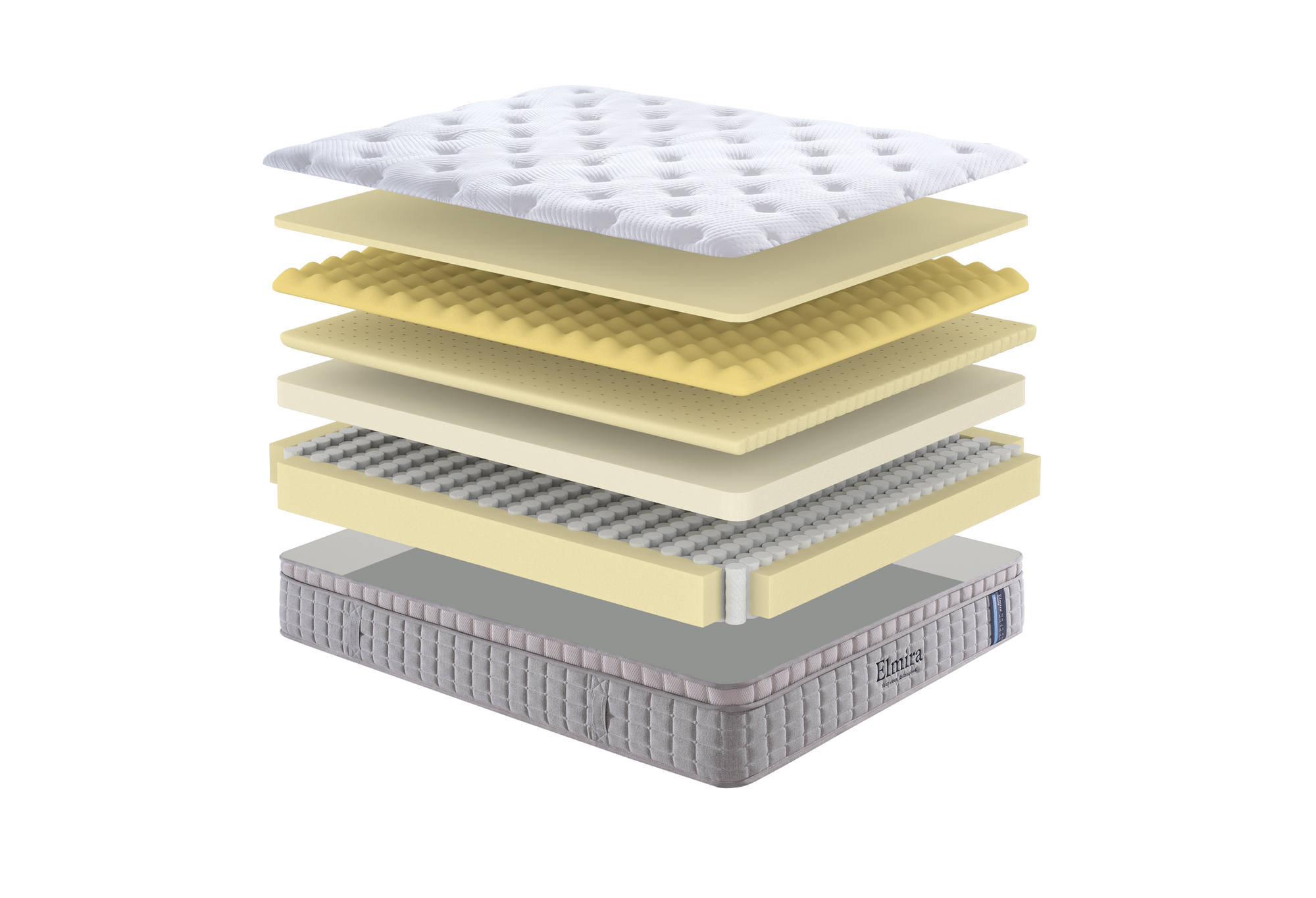
Elmira Hybrid Mattress Structure
Elmira Hybrid Mattress Structure
1. Premium bamboo fabric
2. Proprietary Elmira™ comfort foam
3. Airscape™ foam
4. Natural latex
5. Lumbar support foam
6. Smart pocket coils support system
7. Bottom fiber
Best For: Combining the bounce and support of coils with the pressure relief of foam/latex. Popular for balanced feel.
How To Choose Your Mattress Thickness
How To Choose Your Mattress Thickness
When choosing a mattress thickness, you’ll want to consider these factors.
1. Sleeping Position
1. Sleeping Position
Your sleep position influences how much pressure you put on the bed and where that pressure is concentrated. Therefore, it also affects how thick your mattress should be.
Side Sleepers: Side sleepers put more pressure on their shoulders and hips, so they generally need a thicker mattress between 11” to 14” with substantial comfort layer for adequate pressure relief. A mattress that is too thin is unlikely to let a side sleeper’s shoulders and hips sink in enough, which can lead to pressure buildup and poor posture.
Back Sleepers: Back sleeping often leaves a gap between the lower back and the mattress, which can create extra tension in the lumbar area. A mattress between 10 and 12 inches thick that provides some contouring without sagging can help support the natural curvature of a back sleeper’s lower spine.
Stomach Sleepers: Stomach sleepers are vulnerable to lower back strain if their midsections sink in too deeply. They should typically look for a mattress 11 or less inches thick with enough support to prevent their spines from bending into a U-shape. A taller model may also be suitable if it has a relatively thin comfort system.
Combination Sleepers: As the name implies, combination sleepers change positions throughout the night, meaning they need a versatile mattress that can accommodate different positions. In general, a 12-inch mattress should have a good balance of cradling and support.
2. Body Weight
2. Body Weight
Body weight is just as important as sleep position when choosing a mattress thickness. Sleepers who weigh more sink into a mattress more deeply than lighter individuals and generally need the added support of a thicker mattress.
Sleepers Under 60kg: Thin mattresses often feel too firm for sleepers under 60kg. They are traditionally more comfortable on a model at least 12 inches thick with a generous comfort system that offers significant pressure relief and contouring. However, young children can easily use thinner foam mattresses, such as those commonly found in bunk beds.
Sleepers Between 60kg and 100kg: This weight range encompasses most average-sized adults. A mattress that is 10 to 12 inches thick is usually sufficient. However, your sleeping position and the mattress materials may also influence the ideal thickness.
Sleepers Over 100kg: Because they sink in more deeply, sleepers over 100kg generally favor a mattress at least 12 to 14 inches thick. They typically need a thicker comfort system and a sturdy support core to contour to their bodies without sagging.
3. Number of Sleepers
3. Number of Sleepers
If you sleep with a partner or a child, finding a mattress thickness that suits both of you is a bit more tricky. Couples need a mattress that’s thick enough to support their combined weights and durable enough to last.
You should also consider your preferred sleeping positions. Anyone sharing a bed should look for a mattress at least 11 inches thick but ideally 11 -14 inches. Thinner models are more likely to sag under your combined weight.
Sleep partners who both collectively weigh over 100kg often need an extra-thick mattress to evenly distribute weight over the mattress for sufficient support and spinal alignment.
If you are a single sleeper, you may choose a more traditional 10 to 11-inch mattress. These mattresses can typically support the weight of one to two people comfortably, depending on size.
4. Bed Frame Height
4. Bed Frame Height
Consider the height of your bed frame when shopping for a mattress. If you’re using a bed frame, an extra-thick mattress may be challenging to climb into. At the same time, a thin mattress paired with a low-rise platform bed may seem too close to the ground.
You should be able to sit comfortably on the edge of the bed with your feet resting on the ground. This makes getting in and out of bed much easier, especially for those with limited mobility.
5. Think About Your Age and Health
5. Think About Your Age and Health
As we age, our mobility declines, making it more difficult to get in and out of bed. A mattress that’s too low or too high doesn’t make it any easier. Older individuals should consider a thinner or standard mattress thickness paired with an average bed frame height or one with adjustable legs that a family member can assist in lowering.
Similarly, those with physical mobility concerns outside of age should consider a thin, firmer mattress that’s easy to move around in.
Beyond age and mobility, your body’s physical health should also be a consideration. For example, if you suffer from nightly hip or shoulder pain, a mattress with thick comfort layers may help alleviate some of that pain.
Pros & Cons of A Thick Mattress
Pros & Cons of A Thick Mattress
Depending on your needs and preferences, a thick mattress could make or break your quality of sleep. Here are the pros and cons:
Pros of A Thick Mattress
Pros of A Thick Mattress
- More cushioning: Thick mattresses are made with more layers, which means they could provide additional comfort. This is a huge plus if you prefer a softer bed, have sore joints, or sleep on your side.
- Durability: The extra layers in thicker beds provide extra support. This extra reinforcement helps keep your body from sinking into an unhealthy posture and can help prevent the mattress from sagging over time.
- Support: The additional support from added layers in a mattress makes them a good pick for couples and heavy sleepers.
- Give an image of luxury, comfort and good rest.
Thick Mattress Cons
Thick Mattress Cons
- More expensive: Since thicker beds are made with more materials, they often cost more than thinner models.
- Heavier: Thicker beds are heavier and bulkier than their thin counterparts, which can make them more difficult to move.
- Height: A thick mattress may be too thick for your bed base. If you opt for a thick bed, you may need to buy a new bed or foundation.
Pros & Cons Of Thin Mattresses
Pros & Cons Of Thin Mattresses
Thin beds typically aren’t the best choice for the average person, but they could be great picks for certain types of sleepers.
Pros Of Thin Mattresses
Pros Of Thin Mattresses
- Less expensive: A thinner bed is a good pick if you’re on a budget — since these beds are made with less layers, they’re typically also less expensive.
- Easy to move: Thin beds are smaller and lighter than the average mattress which makes them easy to maneuver and move around.
- More stability: Since thin beds are closer to the ground, they make it easier to get in and out of bed.
Cons Of Thin Mattresses
Cons Of Thin Mattresses
- Durability: Thin beds tend to break down faster than thicker mattresses, so while they’re less expensive — you have to replace them sooner.
- Less support: Thin mattresses don’t provide the same level of support as thicker models, which can cause discomfort.
- Sagging: Since thin beds are less durable and supportive, they’ll start sagging faster which can cause back pain.
Elmira Mattresses By Thickness
Elmira Mattresses By Thickness
Each Elmira mattress has key features that set them apart from one another — one being thickness. Learn more about some of our most popular Elmira mattresses and what their level of thickness can offer you.
| Mattress Model | Thickness |
|---|---|
| Elmira Snow Firm | 11" |
| Elmira Snow Medium | 11" |
| Elmira Snow Plush | 11" |
| Elmira Hybrid Firm | 11" |
| Elmira Hybrid Medium-Firm | 12" |
| Elmira Hybrid Medium-Plush | 14" |
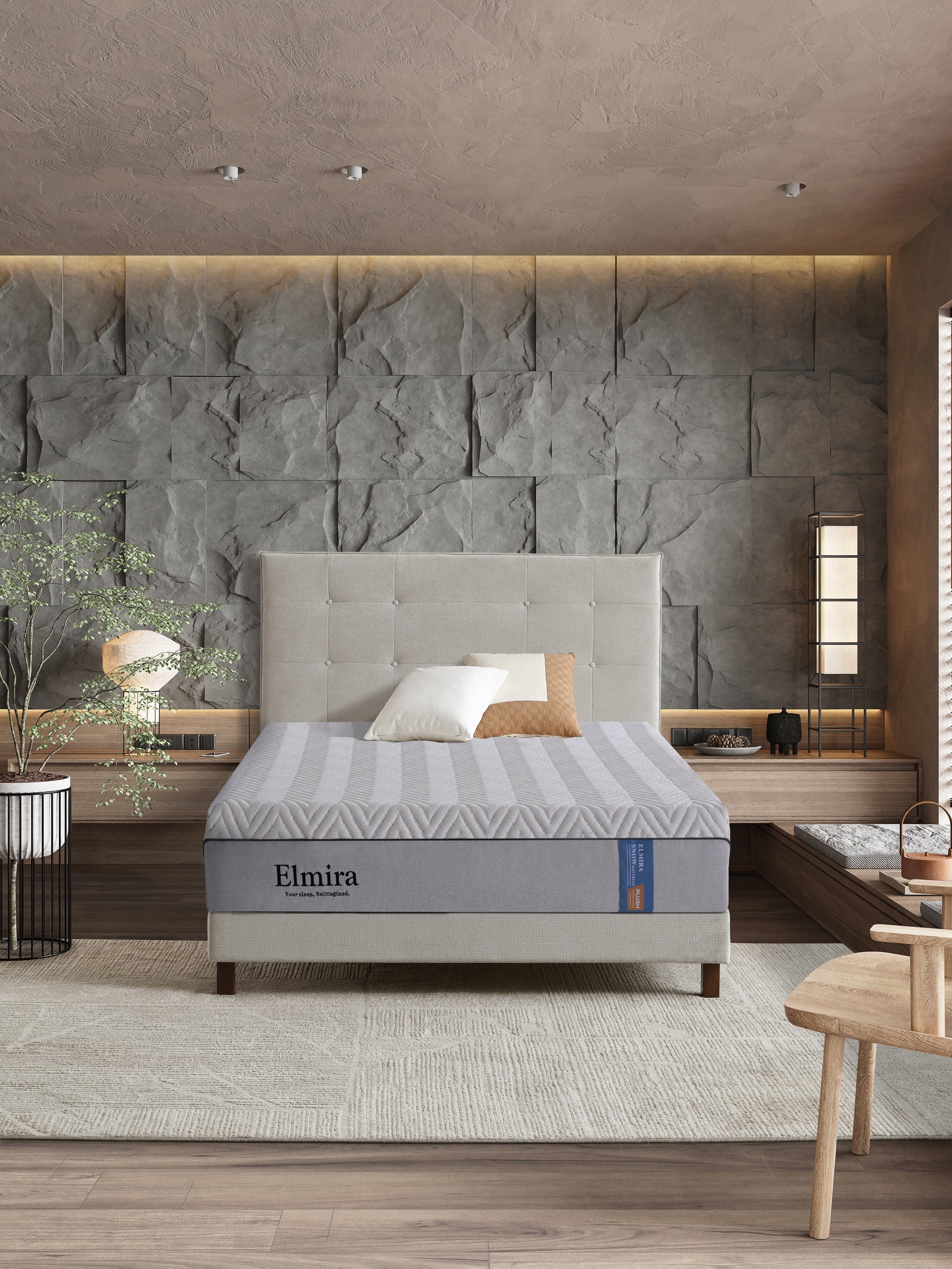
Standard Thickness: The Elmira Snow Mattress Collection
Standard Thickness: The Elmira Snow Mattress Collection
All three models (Firm, Medium and Plush) of the Elmira Snow Mattress collection are 11 inches thick, which is considered standard mattress height. These wallet-friendly options are great for sleepers who are looking for a boatload of comfort at prices that won’t break the bank.
Best for: Sleepers looking for comfort and support
Pros:
- Most affordable Elmira mattresses
- Excellent motion isolation so you won’t notice when you partner gets up or lie down.
- AirScape™ lets air circulate to keep you cool
- Premium Elmira comfort foam conforms to your body to relieve pressure
- Durable base foam offers long-lasting support
- snow-cool cover which feels cool to touch so you enjoy cool refreshed sleep.
- Three types of firmness level to choose from - Firm, Medium and plush.
Cons:
- May not be thick enough for sleepers who enjoy very high mattresses.
- May not be firm enough for those who like stone-like kind of firm-orthopaedic mattress.

Affordable Luxury: The Elmira Hybrid Firm & Medium-Firm
Affordable Luxury: The Elmira Hybrid Firm & Medium-Firm
The Elmira Hybrid Firm and medium firm models are 12 inches thick, which sits between a standard and thick mattress height. This mattress is a great option for those looking for sturdy support and a touch of luxury.
Best for: Sleepers who require lumbar support
Pros:
- Luxurious soft top layer comforts you to sleep
- AirScape™ foam helps prevent overheating
- Zoned Support™ Pro helps align your spine
- Resilient Pocket coils prevent sinking and add lift and airflow
- Designed to let your back muscles rest and sleep in alignment
- Designed to give you the support your body needs
Cons:
- More expensive Elmira snow mattress
- Heavier than Elmira snow mattresses

Ultra Luxury: The Elmira Hybrid Plush
Ultra Luxury: The Elmira Hybrid Plush
The Elmira hybrid plush is 14 inches thick, which is way more thicker than the standard mattress height. If you’re looking to indulge in a higher-quality mattress, you may find the plush Hybrid is your perfect fit.
Best for: Side Sleepers who require premium cushioning and dreamy comfort. Also great for sleepers who enjoy sinking into a mattress.
Pros:
- Extra thick airy memory foam creates a plush, cloud-like feel while improving airflow and cushioning comfort.
- AirScape™ foam dissipates heat away maintaining a cool, breathable sleep environment.
- Innovative Elmira comfort foam gently conforms to the body to relieve pressure and promote deep relaxation throughout the night.
- Uses hundreds of resilient pocket coils to add lift, airflow, and a bit of bounce
- Cradling top foams help you fall asleep faster
- Luxury cradling pillow-top comfort layer to help you fall asleep faster and enjoy a restorative sleep experience.
- Double Thickness Air Memory Cloud-Like Foam:
- Medium feel lumbar support foam provides balance support, maintains proper spinal alignment without feeling overly firm.
Cons:
- Most expensive Elmira mattress
- Very Heavy to move
For a Mattress Thickness Right for You, Choose Elmira
For a Mattress Thickness Right for You, Choose Elmira
No matter whether you’re in the market for a softer mattress or a more firm mattress, with a Elmira mattress, you can cozy up to pressure point relief, ideal spinal alignment, and long-lasting durability to achieve the sleep you’ve been dreaming of.
We’re sure you’ll find the mattress that’s just right for your individual sleep needs. To make the most out of your sleep and find the mattress that’s just right for you, choose Elmira.
Frequently Asked Questions
Does the Base Layer Affect Mattress Durability?
Does the Base Layer Affect Mattress Durability?
The thickness of a base layer can affect how long your mattress lasts. Mattresses with pocket coils can last 7 to 10 years, whereas memory foam can last 7 to 10 years. These estimates will depend on the number of coils or memory foam thickness. For maximum durability, your base layer should be at least 50% of the bed height.
Do I Need Larger Sheets for a Thicker Mattress?
Do I Need Larger Sheets for a Thicker Mattress?
Mattresses taller than 14 inches may require a larger sheet size. Adding a mattress pad or topper may also require a larger size sheet.
Does mattress thickness affect the choice of bedding or sheets?
Does mattress thickness affect the choice of bedding or sheets?
The thickness of your mattress can affect what bedding you need. If you choose a thick or an extra-thick mattress, you may need deep pocket or extra-deep pocket sheets designed to fit higher-profile models. The packaging or product description should mention the pocket depth, which clarifies how thick a mattress the fitted sheet accommodates.
What’s the difference between mattress thickness and bed height?
What’s the difference between mattress thickness and bed height?
Bed height sometimes confused with thickness, differs in that it is the combined measurement of the bed’s depth and bed frame. Bed height refers to how high a mattress sits above the floor.
Thickness should also not be confused with size.
What’s the difference between mattress thickness and bed size?
What’s the difference between mattress thickness and bed size?
Bed sizes are determined by the horizontal dimensions (i.e., width and length). The thickness of a mattress depends on the model, but for most models, every size has the same thickness — no matter the mattress size.
Is an 8-inch mattress thick enough?
Is an 8-inch mattress thick enough?
An 8-inch mattress is technically a “standard” size that would suit the average sleeper, but it may not be thick enough depending on your sleep needs and preferences. An 8-inch mattress will typically be on the firmer side. If you’re a lightweight sleeper, you’ll need a slightly thicker bed so that your mattress doesn’t feel too firm. Likewise, heavyweight sleepers will be more comfortable on a bed that is at least 12 inches thick so they get the support they need.
Does Mattress Thickness Affect Durability?
Does Mattress Thickness Affect Durability?
The thickness of a mattress’s base layer — not necessarily the bed’s overall thickness — affects durability. A thicker, superior base layer provides more support and can withstand longer use or heavier weights.
Does Mattress Thickness Affect Firmness?
Does Mattress Thickness Affect Firmness?
Mattress thickness is related to mattress firmness and density. In general, you can expect a softer mattress to be thicker and a firmer mattress to be thinner if they are made from the same materials.
How Thick Should My Memory Foam Mattress Be?
How Thick Should My Memory Foam Mattress Be?
A memory foam mattress should be 10 to 14 inches thick. A thinner mattress is more prone to sagging over time and may not provide as much cushiony comfort as thicker memory foam. A high-quality memory foam mattress can last you eight to 12 years if taken care of correctly.
What is the best mattress thickness?
What is the best mattress thickness?
The best mattress thickness for you depends on your needs. A standard mattress between eight and 12 inches thick typically suits the average sleeper. Thinner mattresses are better for toddlers, kids, and seniors, or if you have a trundle bed that doesn’t have space for a thicker bed. Thicker mattresses are better for those who need extra support or cushioning, heavyweight sleepers, or those who sleep with a partner or a pet.
What thickness memory foam mattress is the best?
What thickness memory foam mattress is the best?
Unless you are shopping for a child or senior with mobility issues, most adults will be most comfortable on a memory foam bed that is at least 10 to 12 inches thick.
Are thicker mattresses better?
Are thicker mattresses better?
Thicker mattresses are typically more durable and provide more support, but thinner mattresses can be better for children or those with mobility issues.
How thick is the average mattress?
How thick is the average mattress?
Most mattresses are between eight to 12 inches, although some thicker beds can be up to 16 inches tall.